Take what you want, give what you can.
This space is for all of us to discuss and share our insights about the gaps in dominant user centred UX design frameworks.
Based on our insights, gained from the analysis of alternative frameworks led to an understanding of what is missing in these frameworks and a shift in our being and doing as designers.
This space welcomes usage of the content posted here but please do mention the source and more importantly please share how the content helped your exploration. What you give back here (by way of content) will be the critical path to this ‘commons’ space evolution.
Of course, the overarching ‘agenda’ is to help design alternative sustainable ecosystems that are equitable and inhabited by empowered citizens who think critically and make responsible decisions by themselves.
Share your work in 3 easy steps

The socio-technical approach therefore was a rebellion against Tayloristic practices that represented an instrumental view of workforce of the time. Thus, its early history demonstrates that the socio-technical researchers consistently have pursued a revolutionary objective: the need for humanizing jobs through redesigning practices and propagating democracy at work.”
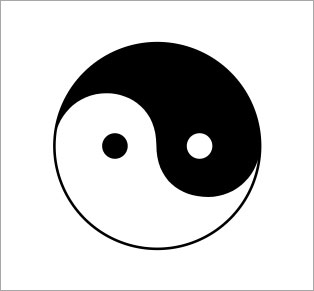
The Yin Yang symbolizes the concept of non-duality in the form of the whole made of two parts. It is one circle made of two opposite and complementary movements which are in themselves paradoxical since both contain their opposite at their hearts. These two forces both create and neutralize each other, and they’re held together within the completeness of the encompassing circle.