New Ways of Thinking
Critical Theory and UX Design
 While UX Design practice has evolved, keeping its positivist frameworks in place, other fields relevant to UX design including the larger field of design has raised questions about the fields’ objectives, actual impact and the need to embrace new directions and perhaps even revisit the original philosophy.
In addition to the changes in fields related to UX design practice, in the last two decades new theoretical constructs as well as design frameworks/practices have emerged that have all been situated in critical theory. These emergent ways to critically reflect on dominant discourses in current design practice have led to radically new ways to practice design.
The ideas of William Morris, and the mid-19th century Arts and Crafts movement in Britain, were based on values challenging those of the contemporary industry (Raizman & King, 2003). Morris’s ethos refused capitalist and consumerist ideas, an ideal that later became an inspiration for the Weimar schools of craft and after that the Bauhaus.
Victor Papanek’s works in the 1970s (Marenko, 2015): Papanek famously named traditional design among the most harmful and phony professions, because of its links to capitalist culture—a culture where, according to Papanek, people are lured to borrow money to buy things they don’t need, to impress people that don’t care. Papanek envisioned a greater role for design, integral to the world’s development in environmental and social terms (Raizman & King, 2003). Papanek was both utopian and dystopian: On one hand, he imagined worlds where idealistic organizations directed design, so that efficient use of resources and a broader public and social interest always was the basis for development. The ongoing scope shift in the design field towards society-scale issues and questions such as whether designers are apt as contributors to social transformation requires ways of alternative thinking. Additionally, in the last decades, new working areas for designers such as health- and public service design have emerged, that require reflection on e.g. the commercial purpose of design, the various roles a designer plays in society and her/his relation to users and stakeholders.
While ergonomics has been very slow in reflecting and questioning its own philosophical foundation, change was, however being envisioned as far back as in 1979. Chapanis, in his address, ‘Quo Vadis Ergonomia’ (Chapanis: 1979), talked about (contrary to what others in the field were saying at that time) how ergonomics was moving away from the primary focus on the individual worker and his machine.
Perhaps the most important implication of what I have tried to tell you is that I think ergonomics is at last becoming involved in much larger social systems than has been the case in the past. I might add that I am delighted to see ergonomists become involved with these larger social issues, because such matters have for too long been in the hands of lawyers, politicians, political scientists, and operations researchers (Chapanis, 1979).
With the development of third wave HCI came renewed and explicit focus on values in design (Harrison et al. 2007) and the “marginal user” (Bardzell 2010). The turn also signaled an opportunity for methodological innovation as new avenues of inquiry for the field “in experience, emancipation, domestic life, intimacy, sustainability, and the good life” (Bardzell and Bardzell 2015). Because computing had moved out of the traditional workplace context and outside the sphere of simple efficiency optimization, these new third wave concerns were mismatched to HCI’s dominant method and evaluation paradigms.
Domestic lives are subjective and emotional, and the “home” is more than the mere physical space of a house or apartment; it is also a cultural construct where gender identity plays a major role. Home lives, whether or not information technologies are involved, are often dictated, for example, by gender norms. A range of new practices were emerging to try to address these issues, often framed as critical methodological interventions against dominant HCI practices which were mismatched to explore these questions.
Participatory design, Feminist HCI and Postcolonial computing draw more directly from the domain of humanistic principles (Bardzell and Bardzell 2015) and critical theory while Speculative and Critical Design has a more indirect connection with critical theory (in spite of the name). They integrate a collection of analytical and interpretative methodologies, ethical values and political positions. Feminist HCI and postcolonial computing, in particular, foregrounds the marginal user and hence makes it imperative for UX researchers and designers to think of alternative research approaches that are collaborative and inclusive.
However, to apply the PD, Speculative Design, Feminist HCI or Postcolonial computing and design approach in the conceptualization of experiences to be designed, there appears to be no guidance about methodology to be used. How does one breakaway from the one snapshot in time (often incentivized) participation of end users? How can this onetime participation by end users lead to new theory that forms the basis of an alternative practice that in turn answers the research questions raised earlier? How does one not privilege the expert researcher/designers’ perspective through the entire research and design cycle? Further, the absence of a methodology creates a challenge when design practitioners need to apply these approaches in corporate situations where the outcomes have to be tangible and should include and balance multiple voices. These outcomes, especially if they challenge current discourses, need the weight of “evidence” and more importantly, the conviction of the UX researcher/designer. This evidence and conviction can be greatly facilitated by the use of an overarching theoretical framework with associated methodological support. On the other hand, Design Justice and ECCD do have an overarching framework to action the approach and both frameworks focus on not privileging the expert researcher/designers’ perspective but the methodology for both leaves much to interpretation and while working well in social design projects, needs some modifications for application to corporate design projects.
Beyond the Alternative Approaches
To explore the existence of suitable frameworks with associated methodologies applied in the creation and building of technology-based systems but outside the field of design, the possibility of the field of Information Systems being a worthwhile area to investigate emerged from the strong influence that the socio-technical view had on Participatory Design at its inception (Ehne and Kyng 1987). The socio-technical view is one of the four main views used to define Information Systems. Therefore, a review of approaches in this cognate field of practice, that is Information Systems with particular focus on the socio-technical view, was undertaken.
Information Systems
Information Systems is a field that “involves the effective design, delivery, and use of information and communications technologies to solve problems for companies, governments, and society (Carnegie Mellon University).” There is a very clear difference between information systems and information technology. Information systems concerns itself not only with technology but also with the people and processes involved with and impacted by the technology. On the other hand, Information technology concerns itself with the design and implementation of information within the information system. Technical or computational aspects of technology is not the main concern of the Information systems field. Instead, it looks at how technology is appropriated and designed to realize information needs of various individuals and groups (Boell and Cecez-Kecmanovic 2015).
There are four diverse views of Information systems: a technology view, a social view, a socio-technical view and a process view. Each view reflects the aspect emphasized by its definition (Table 1).
- Technological view focuses on all things to do with technology such as processing, storage and transformation of data.
- Social views information systems as primarily social systems.
- Socio-technical view posits that information system are made of both social and technological elements and these are interrelated.
- Process view conceptualizes information systems in terms of performing and supporting activities and processes.
| View | Exemplary Definition |
|---|---|
| Technology View | “The system utilises computer hardware and software; manual procedures; models for analysis, planning, control and decision making; and a database. The emphasis is on information technology (IT) embedded in organizations” [88, p. 181]. |
| Social View | “An information system is a social system, which has embedded in it information technology. The extent to which information technology plays a part is increasing rapidly. But this does not prevent the overall (information) system from being a social system, and it is not possible to design a robust, effective information system, incorporating significant amounts of the technology without treating it as a social system” [47, p. 215]. |
| Socio-technical View | “The information systems field examines more than just the technological system, or just the social system, or even the two side by side; in addition, it investigates the phenomena that emerge when the two interact” [52, p. iii]. |
| Process View | “As IS is a work system whose process and activities are devoted to processing information, that is, capturing, transmitting, storing, retrieving, manipulating, and displaying information” [1, p. 451] |
Table 1. Overview of Information Systems
Source: Ghaffarian, Vafa. 2011. “The New Stream of Socio-Technical Approach and Main Stream.” Procedia Computer Science 3: 1499–1511.https://doi.org/10.1016/j.procs.2011.01.039
The Socio-Technical View (Ghaffarian 2011)
Researchers at the Tavistock Institute of Human Relations in the UK first coined the term “socio-technical.” This institute was set up to help a society damaged by the effects of the Second World War by integrating research in social and psychological sciences. Some of the scholars formulating techniques to rehabilitate soldiers impacted by the war, believed that the same techniques could be used to help employees working at lower ranks within organizations who spent a lifetime doing routine tasks at work with little possibility of job satisfaction or personal development.
“The socio-technical approach therefore was a rebellion against Tayloristic practices that represented an instrumental view of workforce of the time. Thus, its early history demonstrates that the socio-technical researchers consistently have pursued a revolutionary objective: the need for humanizing jobs through redesigning practices and propagating democracy at work (Ghaffarian 2011).”
The socio-technical approach of the Tavistock Institute found strong acceptance in Scandinavian countries. It is interesting to note that the principles of participatory design (PD) strongly reflect this socio-technical perspective (Kuutti 1996). Kristen Nygaard–and later Bo Dahlbom, Pelle Ehn, Erik Stolterman who figure prominently in the journey of Participatory Design, especially in the early days of PD were responsible for pioneering the Scandinavian approach to social analyses of computing based on the socio-technical approach. The Scandinavian socio-political context which was grounded in deep appreciation of workers’ rights (Sawyer and Tapia 2007) provided strong resonance with the Tavistock socio-technical approach. The social-technical approach to information systems evolved further in the 1990s when it was strongly inspired by social science theory (i.e. structuration theory or theories from science and technology studies) (Dunlop and Kling 1991).
The socio-technical approaches to studying information systems (and ICT, in recent times) are very different from other approaches in three distinct ways:
1. Inclusion of Context
This approach includes data collection over time instead of ignoring the temporal dimension and using a single snapshot data collection method which is what about 90% of Information Systems research using other approaches do (Orlikowski and Baroudi 1992). This approach leads to a holistic view of context, by paying attention to all contextual elements and hence does not reduce “contextual insights into parsimonious explanations” (Pettigrew 1985). Pettigrew, for example, rests his analysis on two dimensions of context: the horizontal and the vertical (Figure 11). Suchman (2007), who focuses on a much different context also echoes the importance of including context. Her perspective is that scholars need to “situate the research phenomena in extended spatial and temporal relations” (Suchman 2007).
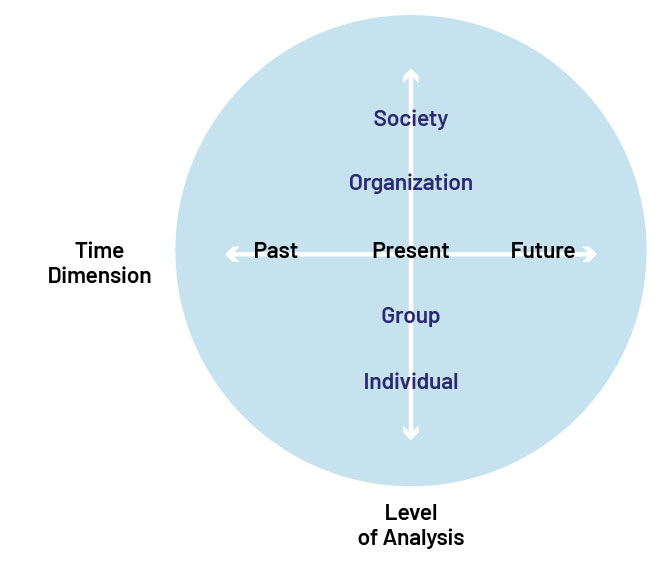
Figure 1. Horizontal and Vertical Dimension of Contexts
Source: Ghaffarian, Vafa. 2011. “The New Stream of Socio-Technical Approach and Mainstream.” Procedia Computer Science 3: 1499–1511. https://doi.org/10.1016/j.procs.2011.01.039
2. Going Beyond Rationality
Unlike other approaches to Information Systems which privilege rationality and tilt towards economic and technological determinism to maximize utility as the main objective, the socio-technical approach expands the perspective and acknowledges the subjectivity of different stakeholders. The definition of who is a stakeholder is also more inclusive and “socio-technical research seeks to include other legitimate actors in the IS/ICT innovation scene: the operators, the customers, the citizens, the gendered individuals, the “poor”, the government and the like (Avgerou, Ciborra and Land 2004).” As a result of this wider scope, socio-technical approaches add to the rational perspective by recognizing that the divergent group of stakeholders represent multiple contextual perspectives and hence their contextual and situated “logic” can differ from any one pre conceptualized plan (Ciborra and Lanzarra 1999) (Orlikowski and Gash 1994).
3. Building Theory Differently
The socio-technical approach moves away from the standard information systems approaches that view information systems as “a means for processing information with speed, accuracy, and reliability. It is potentially capable of improving organizational efficiency (Hammer 1990), or rational decision-making process (Keen and Morton 1978), (DeSanctis Gallupe 1987) and productivity.” The socio-technical approach largely disengages with this “tool view” of ICT (Kling and Lamb 2000). Instead, it recommends that information systems should be theorized as a socio-technical network (Kling, McKim and King 2003) where the stakeholders “enact distinct technology-in-practices based on the cognitive schemas and the social contexts they are embedded in”, even as they interact repeatedly with information systems (Orlikowski 2000). In addition, recent discourses on information systems that are based on the socio-technical approach have been influenced by ideas from social studies of science and technology. In the more recent socio-technical discourses on information systems, ideas drawn from social studies of science have disputed the belief that science is the result of pure reason and that information systems can by themselves determine social effects (Ghaffarian 2011).
Critical Research as Part of the Socio-Technical Approach
The socio-technical perspective has influenced information systems research to take a turn towards critical research. Critical researchers often use critical social theories of Habermas, Foucault, and Bourdieu and concern themselves with issues such as “freedom, power, social control, and values with respect to the development, use, and impact of information technology (Hirschheim and Klein 1994).” Given that the three theorists we have selected all come from a secular Western culture, Myers and Klein have suggested including principles based, for example, on post-colonial theory (e.g., Said or Babha) or perhaps have a religious basis (e.g., Dooyeweerd) (Myers and Klein 2011).
Critical research, with the following principles provides direction for the methodology that could be appropriate for the research questions raised earlier in this chapter.
- Affirmation of the difference between the natural and social sciences based on the phenomenon of consciousness which people make sense of the structures and experiences they encounter in the world.
- The use of critical theories to challenge dominant discourses that seem universal and natural.
- The emphasis on transformation and the way the world could be rather than merely interpreting the world as it is (Stahl and Brooke 2008; Myers and Klein 2011).
- The appropriateness of critical research in situations where the research method involves intervention of some kind in the real/virtual world (Myers 1997a; Myers 1997b; Thomas 1993). In addition, a more holistic consideration of the ethical and social aspects of the interventions decided by “action researchers and design science researchers” is more likely to be enabled by critical research (Stahl and Brooke 2008; Myers and Klein 2011).
- The role critical research has played in establishing a perspective of transformation in the design and development of Information Systems, a field that is also related to UX Design.
The Elements of Critical Research
Alvesson and Deetz (2000) name three elements that comprise critical research (Figure. 12). These are insight, critique, and transformative redefinition. What is particularly helpful is the availability in the critical research literature detailing these three elements with humanistic principles. They have been further enriched over time with illustrative research studies, many of them practice based, conducted across the world by various researchers.
This scaffolding from theory to practice and then back to enriching existing theory/practice or building new theory/practice offers a methodological paradigm for building a UX practice with an alternative design intent.
| Table 4: A proposed set of principles fro critical research |
|---|
|
The Elements of Critique
|
|
The Elements of Transformation
|
Figure 2. Elements of Critical Research
Source; Myers, Michael D., and Heinz K. Klein. 2011. “A Set of Principles for Conducting Critical Research in Information Systems.” MIS Quarterly 35 (1): 17–36. https://doi.org/10.2307/23043487
